WELLMOD: A Wellbeing Micro-Simulation Model to Enhance Wellbeing for the Future How should government policies be chosen? There is a growing demand that public policy should be more focused on what matters to people. The EU and OECD have urged their members to put people and their wellbeing at the centre of policy design, and…
SWITCH: Targeting Social Well-being to Improve Transitions to School Starting school is one of the earliest major transitions in childhood. Offering both opportunities and risks for well-being and mental health, a smooth transition to school not only depends on children’s cognitive abilities, but also on their social well-being (SWB). This involves relationships within families and…
PROMISE: Promoting Well-Being in Preteens, Adolescents, and Young Adults – Toward Improved Social Media Policies The last decade has been hallmarked by an explosive rise in digital communication. Technologies such as social media present a profound challenge, especially for young people. In parallel, there is the concern of a growing mental health crisis in this…
PM4IWSI: Paradox mindset for individual well-being and societal impact – The role of leaders in social purpose organizations Social purpose organizations (SPOs)—such as social enterprises and non-profits—are pivotal in addressing pressing global challenges, from poverty and inequality to climate change. However, leaders of SPOs face immense pressures and are often torn between self-care and achieving…
MICRO: Measuring children’s wellbeing and mental health with social robots Poor mental health particularly affects children in vulnerable groups. For example, children with developmental language disorder (DLD) and children who have experienced forced migration, e.g., refugees, are more at risk of poor mental health outcomes in comparison with their peers. However, there is a lack…
LGBTI_FUTURES: LGBTI+ youth well-being across Europe: Imagined futures in turbulent times Despite progressive moves towards lesbian and gay equality, societal stigmatisation and discrimination persists across Europe. Lesbian, gay, bisexual, trans, queer, intersex (LGBTQI) people still experience significant inequalities in wellbeing, with these particularly pronounced for young LGBTQI+ people who are at higher risk of depression,…
FLOW: Foster long-term well-being in pre-adolescent children and their families Our mental health is determined by a balance between our individual resources and external challenges. Four researchers from universities in Germany (Svenja Taubner), Lithuania (Rasa Barkauskiene), Spain (Eduardo Fonseca Pedrero) and Switzerland (Martin Debbané) are investigating parents and children with different levels of risk of…
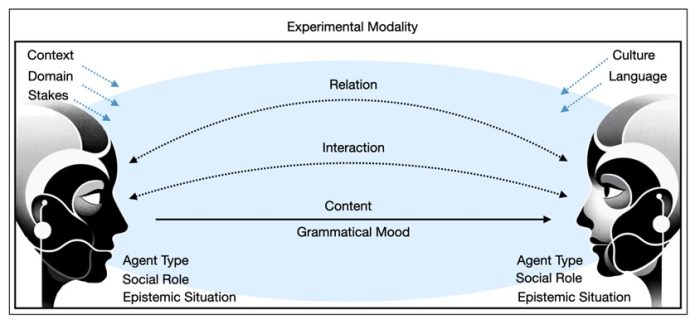
NIHAI: Norms in language-based Human-AI Interaction As misinformation, fake news, and conspiracy theories circulate ever more freely, trust in media, science, and government is eroding. This challenge will intensify further, as we increasingly communicate with, and by aid of, large language models. Our three-year research project seeks to devise principles for responsible LLM communication: Philosophically…
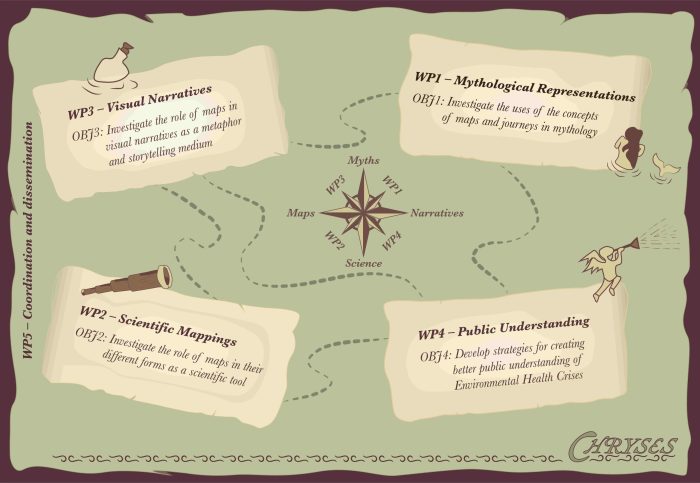
CHRYSES: Mapping Environmental Health Crises – Public Understanding through Myths and Science Environmental health crises such as pandemics, climate change, and biodiversity loss pose challenges not only to science but also to public perception. CHRYSES explores how the approaches taken in mythology through the concept of maps and journeys can be used by science to…
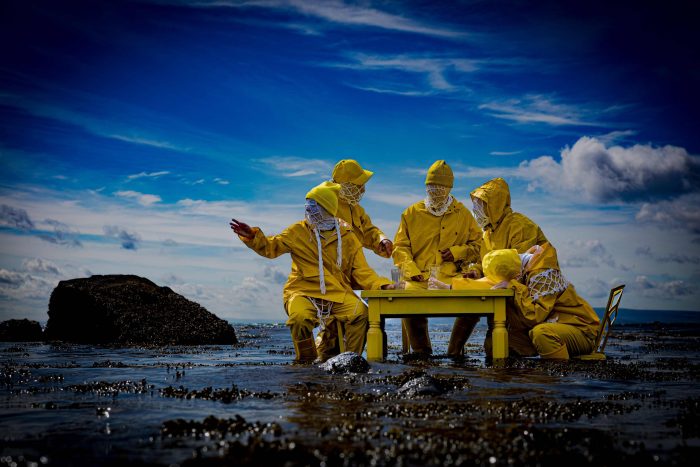
Rehearsal photo from the production An Fear Liath written by Philip Doherty and adapted by Fran Nuñez. Produced by Fíbín Teo in association with Centro Dramático Galego and Tryater. Photograph by Bruno Pierrucci CoastARTS: Coastlines as Zones of Ecocultural Crisis – Shaping Resilience through Transnational Performance-based Arts CoastARTS treats Europe’s coastal areas and their former colonies as rich sites…
We use cookies to ensure that we give you the best experience on our website and anonymously track the website usage. If you're unhappy about it, you can block cookies in your browser settings.